
Understanding How Stock Price Cycles Affect Long-term Returns
Stock price cycles—the recurring patterns of price bottoms, price upsides, price peaks, price downsides, and new price bottoms—are normal for many stocks over many years.
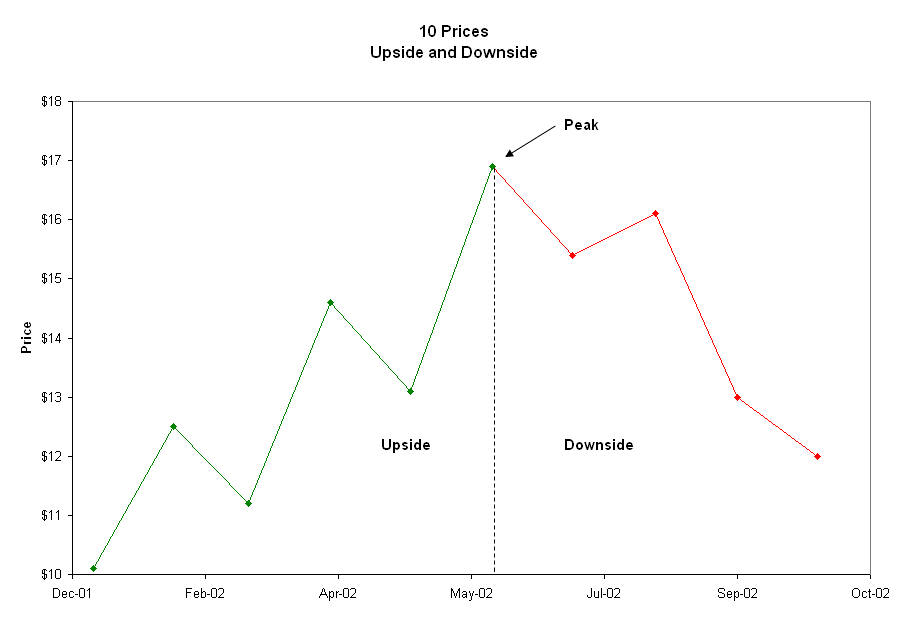
The upside phase of a price cycle is the time when buy-and-hold investors see price appreciation and capital gains. Dividend reinvestment and dollar-cost averaging enhances gains as wealth accumulation is highlighted during price upsides.
The price downside enables dividend reinvestment and dollar-cost averaging investors to acquire high-quality stocks at discounted valuations, lowering their cost basis and increasing dividend yield on cost. Downside phases increase the compounding efficiency of dollar-cost averaging and automatic dividend reinvestments (DRIPs). Reinvesting dividends and regularly buying shares with new money while stock prices are depressed purchases a larger number of shares, accelerating long-term wealth accumulation when the cycle eventually turns upward.
Here are useful calculators to see how price cycles affect long-term returns.